
Molecular Glues
A major focus of the Sperling lab is studying the mechanism of action of protein degraders. These drugs work by a unique mechanism in that they act as a molecular bridge or glue to bring together proteins or macromolecular complexes that would not otherwise interact (Image: Molecular glue.png). The discovery of drugs that work as molecular glues has enabled therapeutic targeting of non-enzyme proteins such as transcription factors and other difficult to drug proteins.
Thalidomide Analogs
Multiple myeloma (MM) is a plasma cell neoplasm with an incidence of over 20,000 new cases in the United States per year. While it is incurable, life expectancy has improved dramatically over the past two decades, in large part due to the development of a number of new drugs including thalidomide and its analogs lenalidomide and pomalidomide. Some of these agents are also active and approved in several other hematologic malignancies including non-Hodgkin lymphoma (NHL) and myelodysplastic syndrome (MDS).
Only recently has the mechanism by which thalidomide analogs exert their antineoplastic effect been described. By acting as a molecular glue and bringing target proteins and the E3 ubiquitin ligase CUL4-RBX1-DDB1-CRBN (known as CRL4CRBN) into proximity, thalidomide analogs mediate poly-ubiquitination and subsequent degradation of critical oncoproteins by the proteasome.
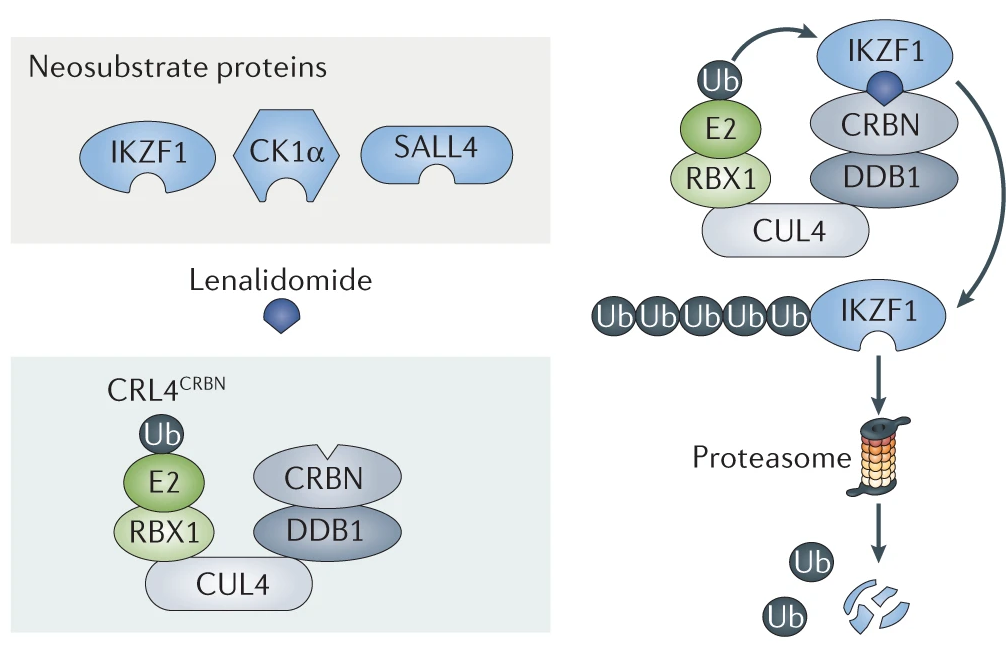
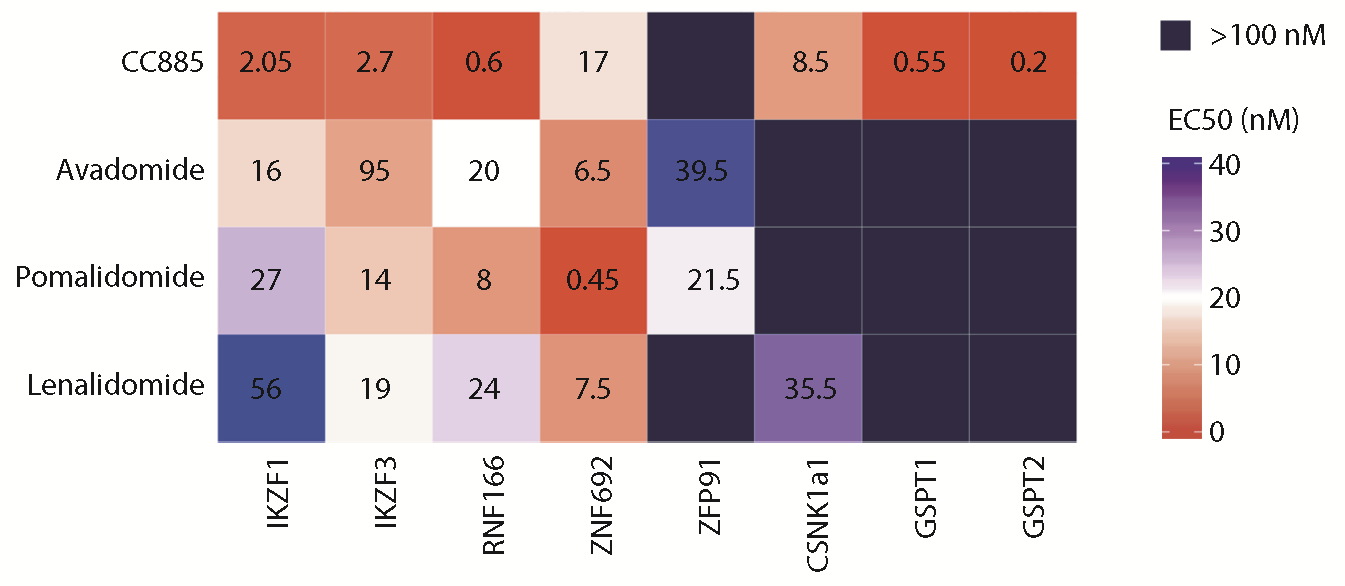
In MM and NHL, degradation of the core lymphocyte transcription factors IKZF1 and IKZF3 leads to growth arrest and eventual apoptosis. In del(5q) MDS, degradation of the haplo-insufficient factor CK1a, encoded by the CSNK1A1 gene on the common deleted region of 5q, is responsible for clinical activity. Different thalidomide analogs, such as pomalidomide and avadomide have different substrate specificity, and thus clinical activity.
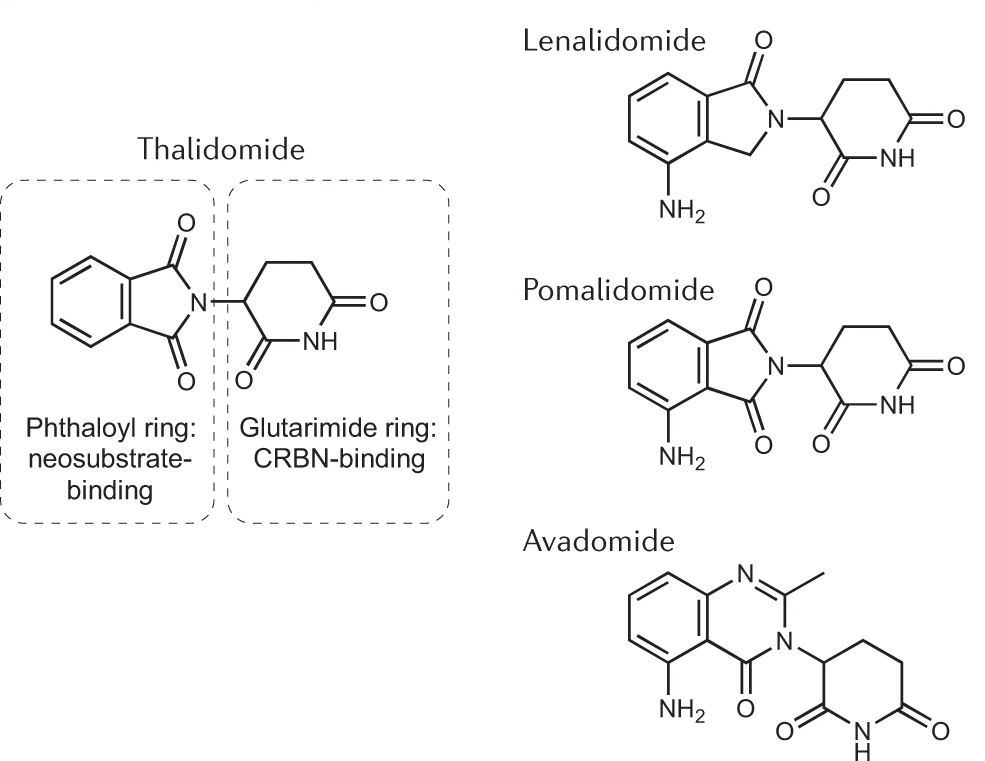
For instance, pomalidomide does not degrade CK1a in vitro and concomitantly has no activity in del(5q) MDS, highlighting the direct and specific relationship between target protein degradation and clinical activity.
MM patients who become refractory to all thalidomide analogs have a dismal prognosis making this an area of unmet clinical need. However, it is largely unknown what mediates resistance to these agents in patients or how to overcome it. A primary focus of the Sperling research lab is to determine the mechanisms of thalidomide analog activity to better understand how resistance develops and to identify new therapeutic targets.
Publications
Degradation of GSPT1 causes TP53-independent cell death in leukemia whilst sparing normal hematopoietic stem cells. Sellar RS*, Sperling AS*, Słabicki M, Gasser JA, McConkey ME, Donovan KA, Mageed N, Adams DN, Zou C, Miller PG, Dutta RK, Boettcher S, Lin AE, Sandoval BE, Quevedo Barrios VA, Shkolnik V, Koeppel J, Henderson EK, Fink EC, Yang L, Chan AK, Pokharel SP, Bergstrom EJ, Burt R, Udeshi ND, Carr SA, Fischer ES, Chen CW, Ebert BL. J Clin Invest. 2022 Aug 15;132(16):e153514. doi: 10.1172/JCI153514.
Cancer therapies based on targeted protein degradation – lessons learned with lenalidomide. Jan M, Sperling AS and Ebert BL. Nat Rev Clin Oncol. 2021 Jul;18(7):401-17. doi: 10.1038/s41571-021-00479-z.
Small-molecule-induced polymerization triggers degradation of BCL6. Słabicki M, Yoon H, Koeppel J, Nitsch L, Roy Burman SS, Di Genua C, Donovan KA, Sperling AS, Hunkeler M, Tsai JM, Sharma R, Guirguis A, Zou C, Chudasama P, Gasser JA, Miller PG, Scholl C, Fröhling S, Nowak RP, Fischer ES, Ebert BL. Nature. 2020 Dec;588(7836):164-168.
The CDK inhibitor CR8 acts as a molecular glue degrader that depletes cyclin K. Słabicki M, Kozicka Z, Petzold G, Li YD, Manojkumar M, Bunker RD, Donovan KA, Sievers QL, Koeppel J, Suchyta D, Sperling AS, Fink EC, Gasser JA, Wang LR, Corsello SM, Sellar RS, Jan M, Gillingham D, Scholl C, Fröhling S, Golub TR, Fischer ES, Thomä NH, Ebert BL. Nature. 2020 Sep;585(7824):293-7. doi: 10.1038/s41586-020-2374-x
Patterns of substrate affinity, competition, and degradation kinetics underlie biological activity of thalidomide analogs. Sperling AS, Burgess M, Keshishian H, Gasser JA, Bhatt S, Jan M, Słabicki M, Sellar RS, Fink EC, Miller PG, Liddicoat BJ, Sievers QL, Sharma R, Adams DN, Olesinski EA, Fulciniti M, Udeshi ND, Kuhn E, Letai A, Munshi NC, Carr SA, Ebert BL. Blood. 2019 Jul 11;134(2): 160-170.
A phase I study of lenalidomide plus chemotherapy with mitoxantrone, etoposide, and cytarabine for the reinduction of patients with acute myeloid leukemia. DeAngelo DJ, Brunner AM, Werner L, Avigan D, Fathi AT, Sperling AS, Washington A, Stroopinsky D, Rosenblatt J, McMasters M, Luptakova K, Wadleigh M, Steensma DP, Hobbs GS, Attar EC, Amrein PC, Ebert BL, Stone RM, Ballen KK. Am J Hematol. 2018 Feb;93(2):254-61. doi: 10.1002/ajh.24968.
Clonal Hematopoiesis
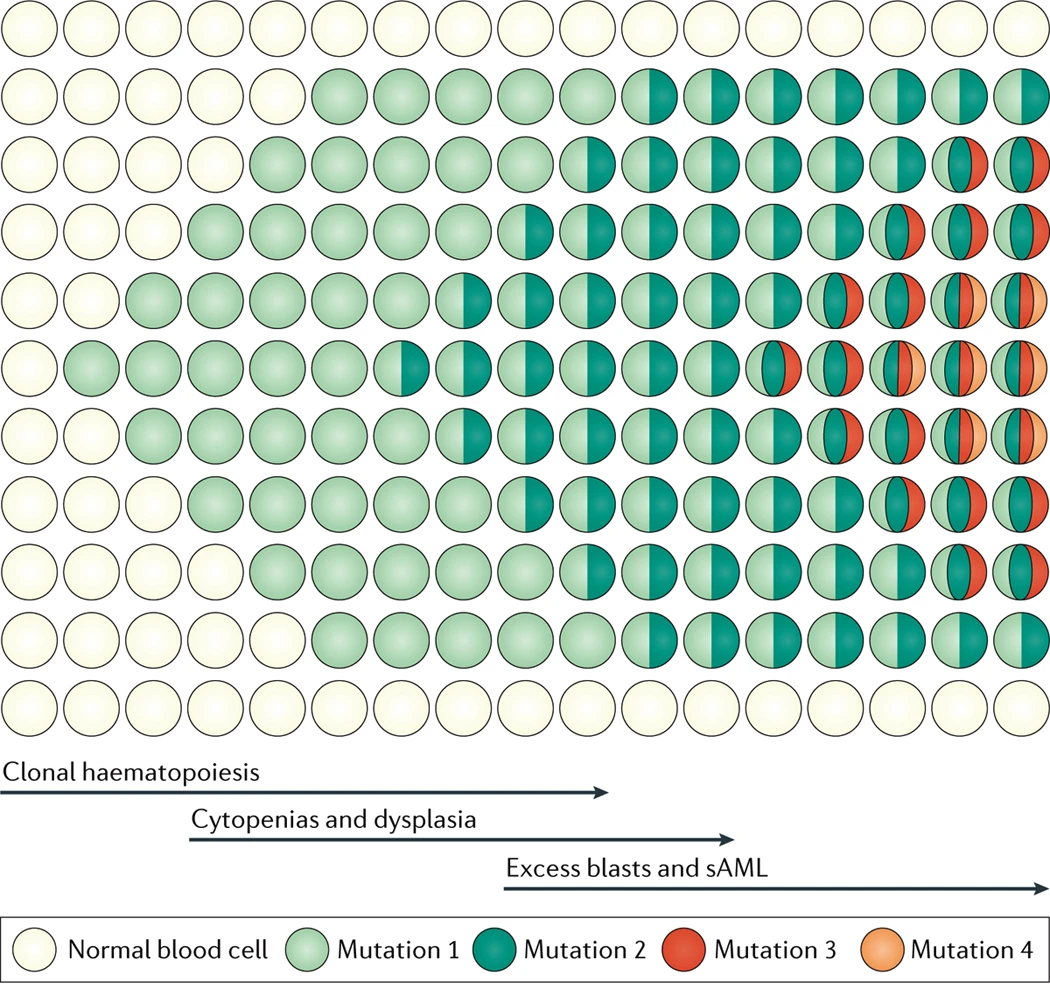
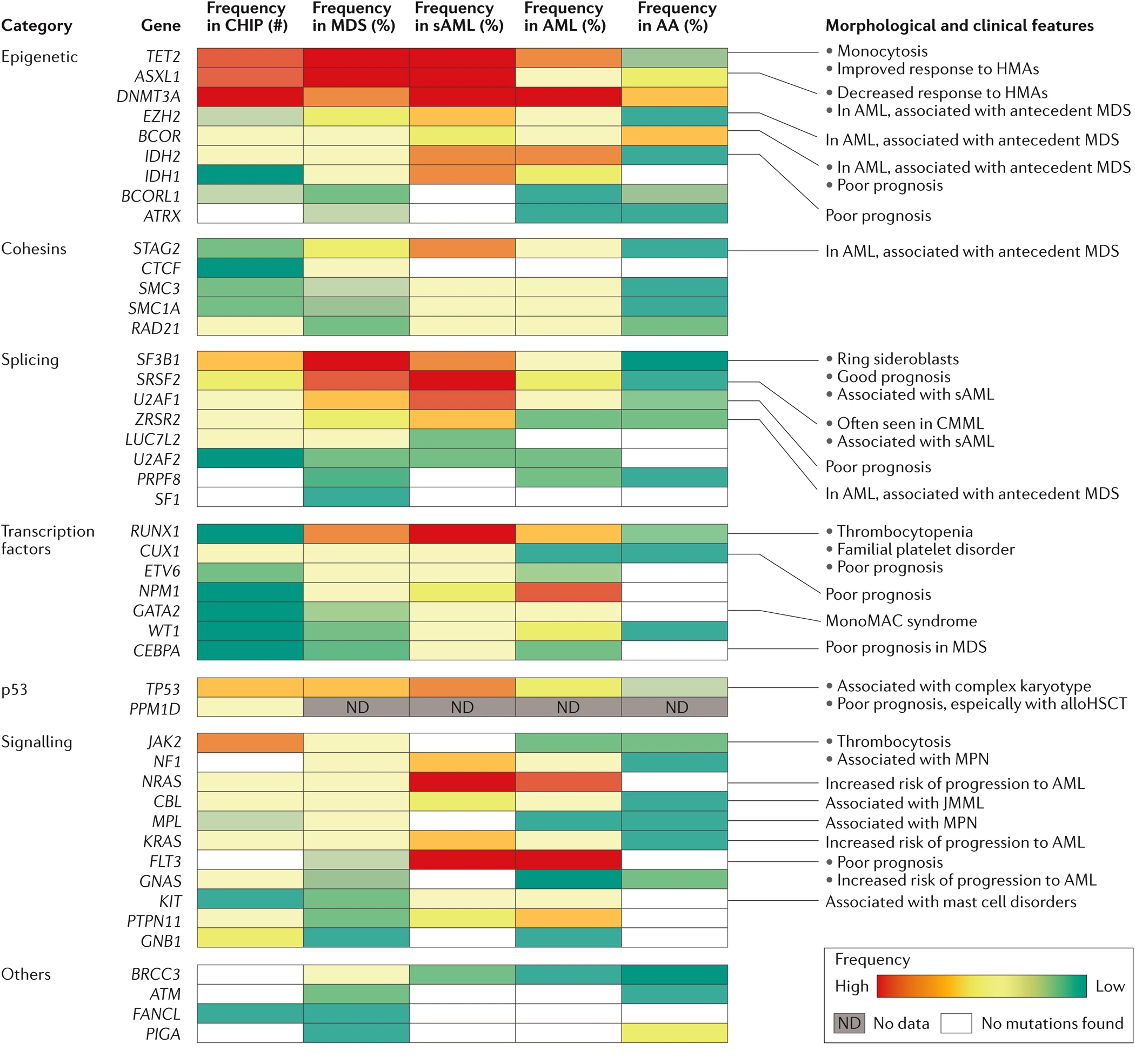
Hematopoietic stem cells (HSCs) can acquire somatic mutations that promote clonal expansion, an age-related process detectable in the blood normal individuals. This process is associated with an increased risk of developing hematologic malignancies and with a number of inflammatory disorders including cardiovascular disease, COPD and rheumatologic disease.
Therapy Related Myeloid Neoplasms
Therapy related myelodysplastic syndrome (MDS) and acute myeloid leukemia (AML), collectively referred to as therapy related myeloid neoplasms (tMN), are blood cancers that arise following the administration of chemotherapy and radiation, usually given for other solid tumors or lymphomas. tMNs are among the most devastating complications of cancer therapy, with a median overall survival (OS) of 7-10 months and a 5-year OS of 10-20%. The old model of tMN development in which mutations accumulate in hematopoietic stem and progenitor cells (HSPCs) induced directly by cytotoxic therapies has been challenged by newer data. Cells carrying leukemic mutations can often be found in the blood of healthy individuals, a condition known as clonal hematopoiesis (CH). These mutant clones can be detected prior to the development of any hematologic malignancy, expand following exposure to chemotherapy, and can evolve into tMNs. However, much remains unknown about how specific therapy exposures shape the evolution and somatic mutation profiles of CH and how this complex interplay leads to the development of overt leukemia.
Understanding how hematopoietic cells evolve under the selective pressures of therapy is a major focus of the Sperling lab. A better understanding of how and under what circumstances, CH evolves to tMN may provide us an opportunity to intervene early to prevent disease development.
Publications
Lenaliomide promotes the development of TP53-muated therapy-related myeloid neoplasms. Sperling AS*, Guerra VA*, Kennedy JA*, Yan Y*, Hsu JI, Wang F, Nguyen AT, Miller PG, McConkey ME, Quevedo Barrios VA, Furudate K, Zhang L, Kanagal-Shamanna R, Zhang J, Little LD, Gumbs CE, Daver NG, DiNardo CD, Kadia TM, Ravandi F, Kantarjian HM, Garcia-Manero G, Futreal A, Ebert BL*, Takahashi K*. Blood. 2022 Oct 20;140(16):1753-63. doi: 10.1182/blood.2021014956.
Clonal hematopoiesis is associated with increased risk of progression of asymptomatic Waldenström macroglobulinemia. Tahri S, Mouhieddine TH, Redd RA, Lampe LM, Nilsson KI, El-Khoury H, Su NK, Nassar AH, Adib E, Bindra G, Abou Alaiwi S, Trippa L, Steensma DP, Castillo J, Treon SP, Ghobrial IM, Sperling AS. Blood Advances. 2022 Apr 12;6(7):2230-5. doi: 10.1182/bloodadvances.2021004926.
Association of Clonal Hematopoiesis with Chronic Obstructive Pulmonary Disease. Miller P, Qiao D, Rojas-Quintero J, Honigberg MC, Sperling AS, Gibson CJ, Bick AG, Niroula A, McConkey ME, Sandoval B, Miller B, Shi W, Viswanathan K, Leventhal MJ, Werner L, Moll M, Cade B, Barr RG, Correa A, Cupples LA, Gharib SA, Jain D, Gogarten S, Lange L, London S, Manichaikul A, O’Connor G, Oelsner E, Redline S, Rich SS, Rotter JI, Ramachandran V, Yu B, Sholl LM, Neuberg D, Jaiswal S, Levy B, Owen C, Natarajan P, Silverman EK, van Galen P, Tesfaigzi Y, Cho M, Ebert BL. Blood. 2022 Jan 20;139(3):357-68. doi: 10.1182/blood.2021013531.
Clonal hematopoiesis in patients receiving chimeric antigen receptor T-cell therapy. Miller PG*, Sperling AS*, Brea EJ, Leick MB, Fell GG, Jan M, Gohil SH, Tai YT, Munshi NC, Wu CJ, Neuberg DS, Maus MV, Jacobson C, Gibson CJ*, Ebert BL*. Blood Adv. 2021;5(15):2982-6. doi: 10.1182/bloodadvances.2021004554.
Contribution of Clonal Hematopoiesis to Adult-Onset Hemophagocytic Lymphohistiocytosis. Miller PG, Sperling AS, Gibson CJ, Viswanathan K, Castellano CA, McConkey ME, Ceremsak JJ, Taylor MS, Birndt S, Perner F, Arnason JE, Agrawal M, Schram A, Nikiforow S, Pihan G, Hasserjian RP, Aster JC, La Rosée P, Morgan EA, Berliner N, Ebert BL. Blood. 2020 Dec 24;136(26):3051-5. doi: 10.1182/blood.2020008206.
Fitness Landscape of Clonal Hematopoiesis Under Selective Pressure of Immune Checkpoint Blockade. Miller PG, Gibson CJ, Mehta A, Sperling AS, Frederick DT, Manos MP, Miao B, Hacohen N, Hodi FS, Boland GM, Ebert BL. JCO Precis Oncol. 2020;4:PO.20.00186. doi: 10.1200/PO.20.00186.
Clonal hematopoiesis is associated with adverse outcomes in multiple myeloma patients undergoing transplant. Mouhieddine TH, Sperling AS, Redd R, Park J, Leventhal M, Gibson CJ, Manier S, Nassar AH, Capelletti M, Huynh D, Bustoros M, Sklavenitis-Pistofidis R, Tahri S, Hornburg K, Dumke H, Itani MM, Boehner CJ, Liu CJ, AlDubayan SH, Reardon B, Van Allen EM, Keats JJ, Stewart C, Mehr S, Auclair D, Schlossman RL, Munshi NC, Anderson KC, Steensma DP, Laubach JP, Richardson PG, Ritz J, Ebert BL, Soiffer RJ, Trippa L, Getz G, Neuberg DS, Ghobrial IM. Nat Commun. 2020 Jun 12;11(1):2996.
Myelodysplastic syndromes (MDS) occurring in Agent Orange exposed individuals carry a mutational spectrum similar to that of de novo MDS. Sperling AS, Leventhal M, Gibson CJ, Ebert BL and Steensma DP. Leuk Lymphoma. 2020;61(3):728-731.
The genetics of myelodysplastic syndrome: from clonal haematopoiesis to secondary leukaemia. Sperling AS, Gibson CJ and Ebert BL. Nat Rev Cancer. doi: 10.1038/nrc.2016.112. 2016.
Immune Effector Cell Therapies
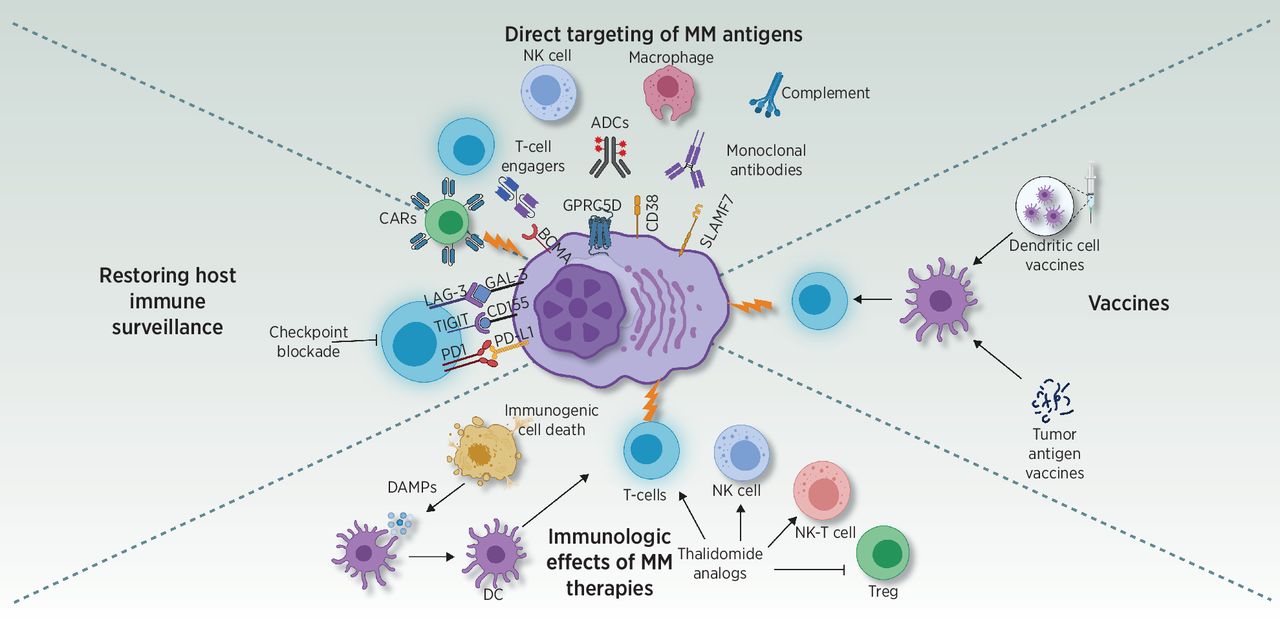
Multiple myeloma (MM) is a plasma cell neoplasm with an incidence of over 20,000 new cases in the United States per year. While it is incurable, life expectancy has improved dramatically over the past two decades, in large part due to the development of a number of new agents. However, almost all patients eventually have their disease relapse, and novel treatment approaches are needed for these patients.
Approaches that re-target or reprogram the patients’ own immune system, such as chimeric antigen receptor T-cells, are an effective and exciting therapy for patients with hematologic malignancies including MM. In the clinic I lead early stage trials to bring these novel technologies to patients and in the lab study approaches to understand and overcome resistance and to improve their efficacy.
Publications
Clonal hematopoiesis in patients receiving chimeric antigen receptor T-cell therapy. Miller PG*, Sperling AS*, Brea EJ, Leick MB, Fell GG, Jan M, Gohil SH, Tai YT, Munshi NC, Wu CJ, Neuberg DS, Maus MV, Jacobson C, Gibson CJ*, Ebert BL*. Blood Adv. 2021;5(15):2982-6. doi: 10.1182/bloodadvances.2021004554.
Facts and Hopes in Multiple Myeloma Immunotherapy. Sperling AS and Anderson KC. Clin Cancer Res. 2021 Aug 15;27(16):4468-77. doi: 10.1158/1078-0432.CCR-20-3600.
Biallelic loss of BCMA as a resistance mechanism to CAR T cell therapy in a patient with multiple myeloma. Samur MK, Fulciniti M, Samur AK, Bazarbachi AH, Tai YT, Prabhala R, Alonso A, Sperling AS, Campbell T, Petrocca F, Hege K, Kaiser S, Avet-Loiseau H, Anderson KC and Munshi NC. Nat Commun. 2021 Feb 8;12(1):868. doi: 10.1038/s41467-021-21177-5.